15 Amazing Lion Facts: Habitat, Diet, Behavior & Conservation Guide
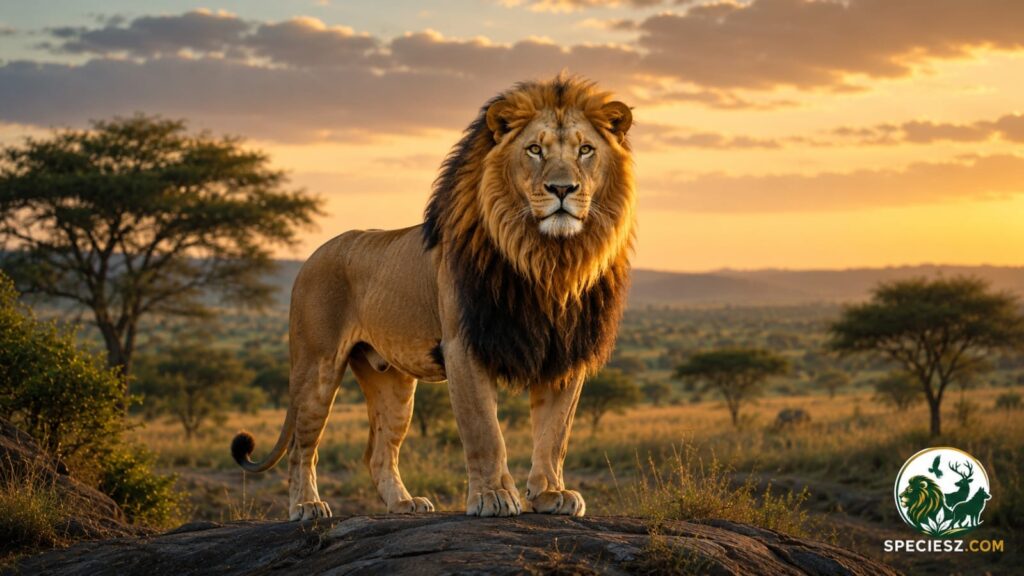
Few animals have earned as much admiration and respect as the lion (Panthera leo)*. Often called the *”King of the Jungle,”** the lion is one of the world’s most recognizable and powerful wild cats. Interestingly, lions rarely live in jungles. Instead, they thrive in open grasslands, savannas, and lightly wooded areas, where their strength, intelligence, and teamwork make them one of nature’s most successful predators.
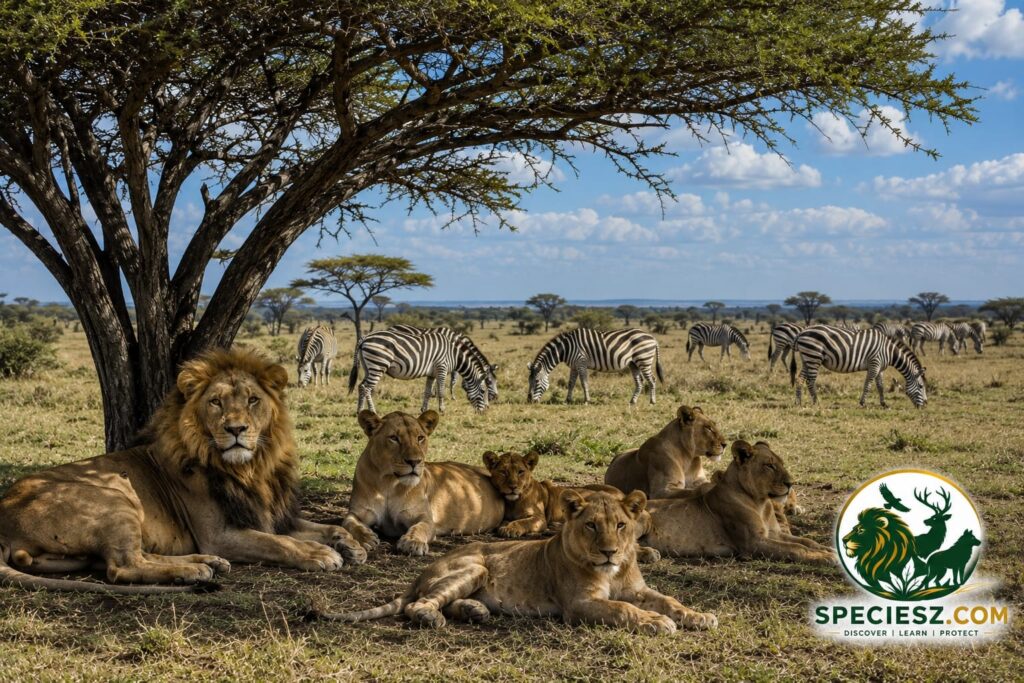
Unlike most members of the cat family, lions are highly social animals. They live in organized family groups known as prides, where females cooperate to hunt while males defend the group’s territory against rival lions and other threats. This remarkable social lifestyle sets lions apart from every other big cat and has fascinated wildlife researchers for decades.
Lions are also essential to healthy ecosystems. As apex predators, they help control herbivore populations, preventing overgrazing and maintaining the natural balance of African landscapes. Their presence influences the behavior of many other species, making them a keystone species in the environments they inhabit.
Despite their legendary status, wild lion populations have declined significantly over the past century. Habitat destruction, human-wildlife conflict, illegal hunting, and a shrinking prey base continue to threaten their survival. Today, conservationists across Africa and Asia are working to protect remaining lion populations through habitat preservation, community engagement, anti-poaching efforts, and scientific research.
In this comprehensive guide, you’ll discover everything you need to know about lions, including their scientific classification, habitat, physical characteristics, behavior, diet, reproduction, conservation status, fascinating facts, and much more.
Quick Facts
| Feature | Details |
|---|---|
| Common Name | Lion |
| Scientific Name | Panthera leo |
| Family | Felidae |
| Order | Carnivora |
| Genus | Panthera |
| Conservation Status | Vulnerable (IUCN Red List) |
| Habitat | Savannas, grasslands, open woodlands, and scrublands |
| Distribution | Sub-Saharan Africa and Gir Forest, India |
| Diet | Carnivore |
| Average Lifespan | 10–14 years in the wild; up to 20+ years in captivity |
| Average Weight | Males: 150–250 kg; Females: 110–180 kg |
| Social Structure | Pride |
| Top Speed | Up to 80 km/h (50 mph) in short bursts |
Scientific Classification
The lion belongs to the cat family (*Felidae) and is one of the five living species in the *Panthera genus. It shares a close evolutionary relationship with the tiger, leopard, jaguar, and snow leopard. These species are collectively known as the big cats because of their size and specialized anatomy.
Taxonomic Classification
- Kingdom: Animalia
- Phylum: Chordata
- Class: Mammalia
- Order: Carnivora
- Family: Felidae
- Subfamily: Pantherinae
- Genus: Panthera
- Species: Panthera leo
What Makes Lions Part of the Panthera Genus?
The genus Panthera includes the world’s true roaring cats. Lions possess a specialized larynx (voice box) and a partially flexible hyoid bone that allow them to produce their famous deep roar. Under favorable weather conditions, a lion’s roar can travel up to 8 kilometers (5 miles), helping pride members stay in contact and warning rival males to stay away from their territory.
Genetic studies indicate that lions share a common ancestor with other Panthera species, having evolved millions of years ago into one of the world’s most successful terrestrial predators. Their combination of strength, cooperative behavior, and adaptability has enabled them to survive across diverse landscapes, from the vast African savannas to the dry forests of western India.
Physical Characteristics
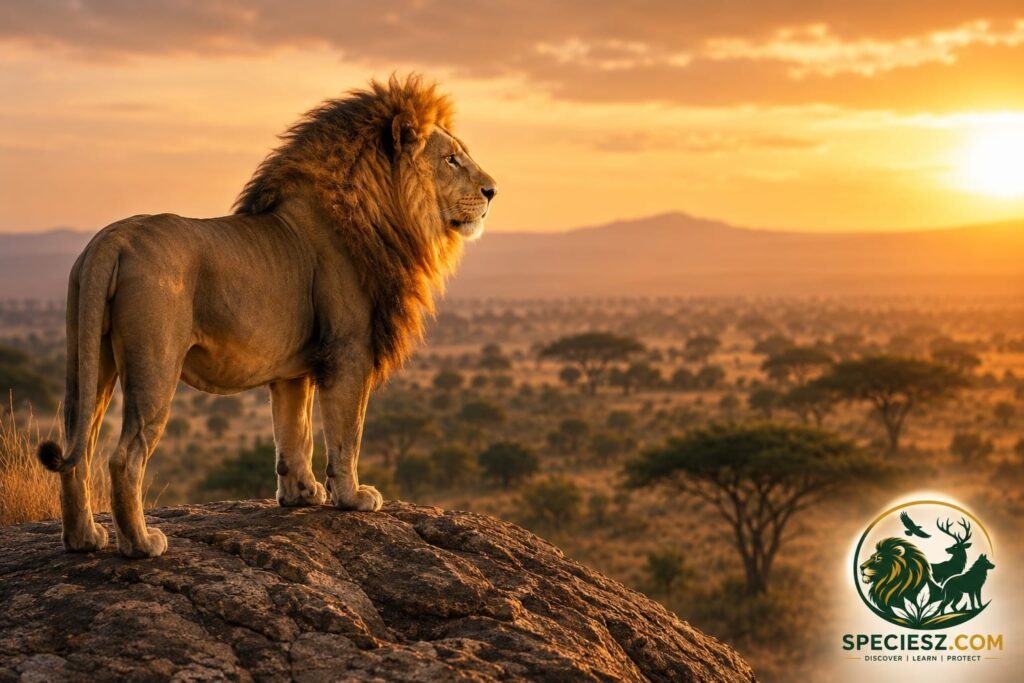
The lion is the second-largest living cat species after the tiger and is built for strength rather than endurance. Its muscular body, broad chest, powerful forelimbs, and sharp retractable claws make it exceptionally effective at capturing large prey.
One of the lion’s most distinctive features is the male’s impressive mane. Ranging in color from blond to dark brown or black, the mane serves several important purposes. It provides protection during fights with rival males, makes the lion appear larger and more intimidating, and often signals maturity and overall health. Female lions do not develop manes, allowing them to move more efficiently while hunting.
Lions also possess excellent night vision, acute hearing, and a highly developed sense of smell. These adaptations enable them to locate prey and communicate effectively with pride members, especially during nighttime hunts when they are most active.
Habitat
Lions are primarily found in *Sub-Saharan Africa, where they inhabit vast *savannas, open grasslands, shrublands, and lightly wooded areas. These habitats provide the ideal combination of prey, water sources, and vegetation for hunting, resting, and raising cubs.
Unlike many people believe, lions do not normally live in dense jungles. The nickname “King of the Jungle” became popular through literature and folklore rather than reflecting their natural habitat. In reality, open landscapes allow lions to spot prey from a distance and coordinate group hunting more effectively.
Today, most wild lions live within protected national parks, wildlife reserves, and conservation areas. These protected habitats are essential for reducing human-wildlife conflict and ensuring healthy prey populations.
Where Do Lions Live?
Wild lions are currently found in around 25 African countries, although their range is much smaller than it was a century ago.
Countries with important lion populations include:
- Tanzania
- Botswana
- Kenya
- South Africa
- Namibia
- Zambia
- Zimbabwe
- Mozambique
- Uganda
Outside Africa, the Asiatic lion survives only in and around Gir National Park and Wildlife Sanctuary in the Indian state of Gujarat. This isolated population represents the last remaining wild lions in Asia and is considered one of the world’s greatest conservation success stories.
Habitat Adaptations
Lions have evolved several adaptations that help them survive in challenging environments.
These include:
- Sandy-colored fur that provides camouflage in dry grasslands.
- Powerful legs for short, explosive chases.
- Large padded paws that allow quiet movement while stalking prey.
- Excellent night vision for hunting after sunset.
- Social cooperation within prides to improve hunting success.
Because lions rely heavily on teamwork, they prefer landscapes with enough open space for coordinated hunting while still offering shaded areas beneath trees or rocky outcrops where they can rest during the hottest hours of the day.
Geographic Distribution
Historically, lions occupied a vast range stretching across Africa, Europe, the Middle East, and much of Asia. Fossil evidence shows that ancient lions once roamed regions as far north as southern Europe and as far east as India.
Over thousands of years, climate change, habitat loss, expanding human settlements, and intensive hunting dramatically reduced their distribution.
Today, wild lion populations are limited to two main regions:
- Sub-Saharan Africa, where the majority of the world’s lions live.
- Gir Landscape in Gujarat, India, home to the only surviving population of Asiatic lions (Panthera leo persica).
African Lion vs Asiatic Lion
Although both belong to the same species, African and Asiatic lions show several noticeable differences.
| Feature | African Lion | Asiatic Lion |
|---|---|---|
| Scientific Name | Panthera leo leo | Panthera leo persica |
| Distribution | Sub-Saharan Africa | Gir Forest, India |
| Mane | Larger and fuller | Usually shorter and less dense |
| Belly Fold | Usually absent | Prominent skin fold present |
| Population | Around 20,000+ individuals | About 700+ individuals |
| Conservation Focus | Habitat protection | Intensive population management |
The successful recovery of Asiatic lions is considered one of the world’s most significant wildlife conservation achievements. From only a few dozen individuals in the early 1900s, their population has steadily increased through legal protection, habitat management, and community participation.
Diet
Lions are obligate carnivores, meaning they survive entirely on meat. As apex predators, they hunt a wide variety of medium and large mammals depending on prey availability within their habitat.
Their diet commonly includes:
- Wildebeest
- Zebra
- Buffalo
- Antelope
- Gazelle
- Warthog
- Impala
- Young giraffes
- Young elephants (rarely)
- Smaller mammals when larger prey is unavailable
Lions are also opportunistic feeders. If the opportunity arises, they may scavenge carcasses left by other predators or steal kills from cheetahs, leopards, and even hyenas.
An adult male lion may consume up to 30–40 kilograms (66–88 pounds) of meat in a single meal, while lionesses generally eat smaller amounts. After feeding heavily, lions often rest for many hours before hunting again.
Rather than hunting every day, lions typically make a successful kill every few days, depending on prey size and hunting success.
Hunting and Feeding Behavior
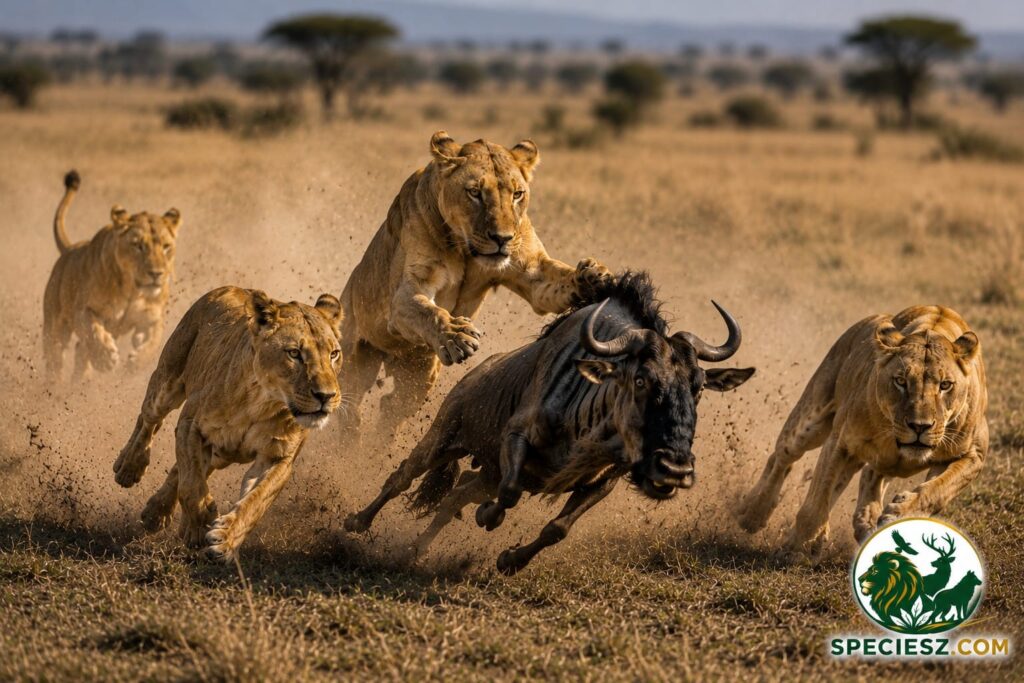
Lions are among the world’s most efficient cooperative hunters. Unlike solitary big cats such as tigers and leopards, lions often hunt together as a pride. This teamwork significantly increases their chances of capturing large and powerful prey that would be difficult for a single lion to bring down.
Most hunts are led by lionesses, which are generally faster, more agile, and better suited for coordinated hunting. Each lioness plays a specific role during the hunt. Some quietly stalk the prey, while others move into position to block escape routes before launching a surprise attack.
How Do Lions Hunt?
Lions usually hunt during the evening, night, or early morning, when cooler temperatures and reduced visibility give them a tactical advantage.
A typical hunt follows these steps:
- Carefully locate suitable prey.
- Quietly stalk the target using tall grass or natural cover.
- Slowly close the distance without being detected.
- Launch a short, explosive sprint.
- Bring down the prey using their powerful forelimbs and jaws.
- Deliver a fatal bite, usually to the throat or muzzle.
Although lions are capable of reaching speeds of up to 80 km/h (50 mph), they can only maintain this speed for a few seconds. Because of this limitation, they rely more on stealth and teamwork than endurance.
Hunting Success Rate
Despite being skilled predators, lions do not succeed in every hunt.
Research suggests that:
- Individual hunting success is relatively low.
- Cooperative hunting by a pride greatly improves success rates.
- Nighttime hunts are generally more successful than daytime hunts.
- Dense vegetation and favorable wind direction increase the chances of a successful ambush.
Many hunting attempts end in failure, forcing lions to conserve energy and carefully choose when to hunt again.
Feeding Hierarchy Within the Pride
Once a hunt is successful, feeding follows a clear social order.
Generally:
- Adult males eat first.
- Lionesses feed next.
- Cubs eat after the adults.
Although this hierarchy can appear harsh, it helps maintain the pride’s structure. Adult males require large amounts of energy to defend the territory, while lionesses depend on regular nutrition to continue hunting and raising cubs.
Lions often consume nearly every edible part of their prey, helping reduce waste and providing food for scavengers such as vultures, jackals, and hyenas after they finish feeding.
Behavior
The lion is the most social member of the cat family. Its behavior is built around cooperation, communication, and strong family bonds, making it unique among all big cats.
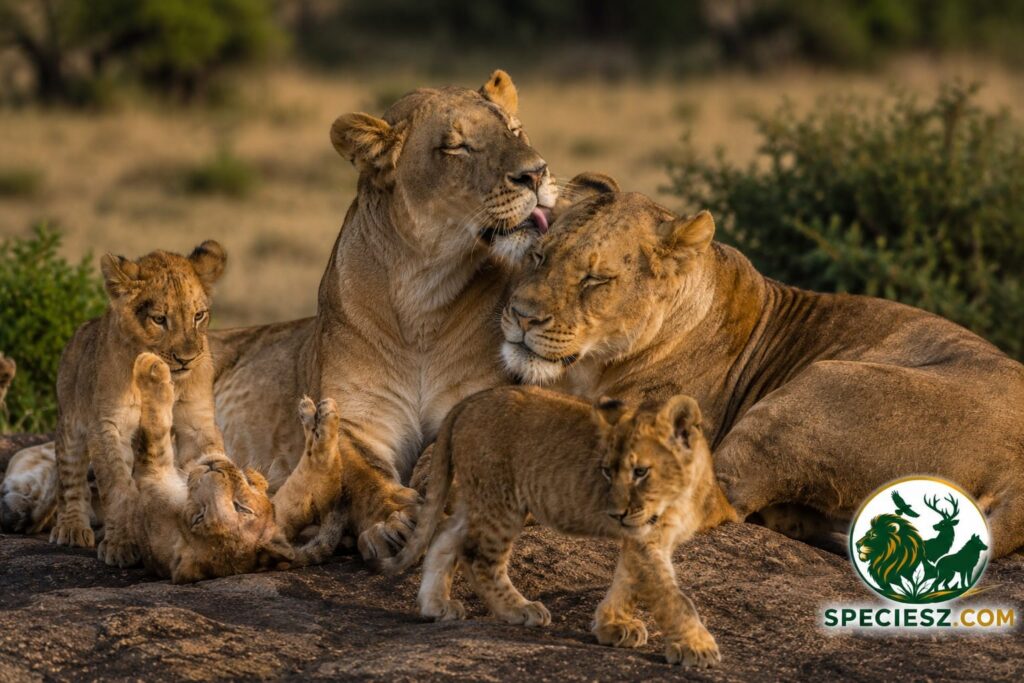
A pride typically consists of related females, their cubs, and one or more adult males. Female lions usually remain with the pride throughout their lives, while young males eventually leave to establish or take over new territories.
Daily Routine
Lions spend much of their day resting to conserve energy.
An average day includes:
- Resting under trees or bushes
- Grooming pride members
- Playing with cubs
- Patrolling territory
- Social interactions
- Hunting during cooler hours
Adult lions may rest for 16 to 20 hours each day, especially during hot weather.
Communication
Lions communicate using a variety of sounds, body language, and scent markings.
Common forms of communication include:
- Powerful roars
- Growls
- Grunts
- Snarls
- Facial expressions
- Tail movements
- Head rubbing
- Scent marking with urine
The lion’s famous roar serves several important purposes:
- Announcing territory
- Locating pride members
- Warning rival males
- Strengthening social bonds
Because a roar can travel several kilometers, it is one of the most effective long-distance communication methods among terrestrial mammals.
Territorial Behavior
Every pride occupies a defined territory that contains food, water, resting areas, and safe locations for raising cubs.
Adult males are responsible for defending this territory against intruders.
Territory defense may involve:
- Loud roaring
- Scent marking
- Visual displays
- Physical confrontations
Conflicts between rival males can be extremely violent and sometimes result in serious injuries or death. Successfully defending a territory is essential because it ensures continued access to resources and breeding opportunities.
Social Structure
One of the most fascinating aspects of lion biology is their highly organized social system.
A pride usually contains:
- 2–18 related adult females
- Their cubs
- 1–4 adult males
This structure allows lions to cooperate in ways that few other carnivores can.
Role of Lionesses
Lionesses are the foundation of every pride.
Their responsibilities include:
- Hunting
- Raising cubs
- Protecting young lions
- Grooming pride members
- Defending the pride when necessary
Because females remain together for life, they develop strong family bonds and work cooperatively to improve the survival of the entire group.
Role of Male Lions
Male lions focus primarily on protecting the pride rather than hunting regularly.
Their responsibilities include:
- Defending territory
- Protecting cubs
- Deterring rival males
- Mating with pride females
A coalition of two or more males often controls a pride together, increasing their chances of successfully defending their territory against challengers.
Reproduction
Lions have a fascinating reproductive system that helps ensure the survival of the pride. Unlike many other mammals that breed only during a specific season, lions can reproduce throughout the year whenever conditions are favorable.
Female lions, known as *lionesses, usually reach sexual maturity between **3 and 4 years of age, while males typically become mature between *4 and 5 years. However, young males often do not mate until they successfully establish or take over a pride.
During the breeding period, a male and female may mate dozens of times over several days, increasing the chances of successful fertilization.
Pregnancy and Birth
The gestation period of a lion is approximately 110 days (about three and a half months).
Before giving birth, the lioness leaves the pride and finds a secluded, well-hidden den among dense vegetation, rocky outcrops, or tall grass. This protects the newborn cubs from predators and rival lions during their most vulnerable stage.
A typical litter contains:
- 1–4 cubs, with two or three being the most common.
- Cubs weigh around 1.2–2.1 kilograms (2.6–4.6 pounds) at birth.
- They are born blind and completely dependent on their mother.
Their eyes usually open within the first week of life, and they begin walking after about two to three weeks.
Raising Lion Cubs
For the first 6–8 weeks, cubs remain hidden while their mother nurses and protects them.
Once the cubs are strong enough, the lioness introduces them to the pride. One remarkable feature of lion society is communal care. Several females may nurse and protect each other’s cubs, greatly improving the survival chances of the young.
As the cubs grow, they begin learning essential survival skills through observation and play.
These include:
- Stalking techniques
- Pouncing
- Wrestling
- Climbing over obstacles
- Social interaction
- Recognizing danger
Play may appear harmless, but it helps cubs develop the strength, coordination, and hunting skills they will need as adults.
Challenges for Young Lions
Life is extremely difficult for lion cubs.
Many face threats such as:
- Hyenas
- Leopards
- Wild dogs
- Starvation
- Disease
- Rival male lions
When a new coalition of males takes over a pride, they may kill existing cubs. Although this behavior seems harsh, it is a natural strategy that allows the females to return to breeding condition sooner, enabling the new males to pass on their own genes.
As a result, only a portion of lion cubs survive to adulthood.
Life Cycle
The life of a lion can be divided into several distinct stages, each marked by important physical and behavioral changes.
Cub (0–2 Years)
Newborn cubs depend entirely on their mothers for food, warmth, and protection.
As they grow, they begin:
- Exploring their surroundings
- Playing with siblings
- Learning hunting behavior
- Developing social skills
By around six months, cubs start eating meat regularly, although they may continue nursing for several more months.
Juvenile (2–4 Years)
Young lions become increasingly independent.
During this stage they:
- Join adults during hunts
- Improve hunting techniques
- Develop physical strength
- Learn pride hierarchy
Young males eventually leave the pride, while most females remain with their family group.
Adult (4–10+ Years)
Adult lions reach their peak physical condition.
Males focus on:
- Territory defense
- Protecting the pride
- Reproduction
Females concentrate on:
- Hunting
- Raising cubs
- Maintaining social bonds within the pride
Senior Lions
As lions age, their strength gradually declines.
Older lions may:
- Hunt less frequently
- Lose dominance
- Develop worn teeth
- Face competition from younger rivals
Many elderly males eventually lose control of their territory and spend their remaining years living alone or with other displaced males.
Lifespan
The average lifespan of a lion depends greatly on whether it lives in the wild or in captivity.
Average Lifespan
| Environment | Average Lifespan |
|---|---|
| Wild | 10–14 years |
| Captivity | Up to 20–25 years |
Wild lions generally live shorter lives because they face numerous challenges, including:
- Injuries during hunts
- Territorial fights
- Disease
- Food shortages
- Human conflict
In contrast, lions living in accredited zoos and wildlife sanctuaries receive regular veterinary care, a reliable food supply, and protection from natural threats, allowing many individuals to live significantly longer.
Predators
Adult lions sit at the top of the food chain and have very few natural predators.
Healthy adult lions are rarely attacked by other animals. However, cubs and weakened individuals are far more vulnerable.
Animals that may prey on lion cubs include:
- Spotted hyenas
- Leopards
- African wild dogs
- Nile crocodiles
- Large pythons (rarely)
The greatest threat to adult lions is humans. Habitat loss, retaliatory killings, illegal hunting, and conflicts with livestock farmers have contributed far more to declining lion populations than any natural predator.
Because lions are apex predators, they play a crucial role in maintaining ecological balance. Protecting them also helps conserve countless other species that share the same habitat.
Threats
Although lions remain one of the world’s most iconic predators, they face numerous challenges that have caused their populations to decline dramatically over the past century. According to conservation experts, wild lions now occupy only a small fraction of their historical range.
The greatest threats facing lions today are caused by human activities rather than natural predators.
Habitat Loss
Habitat destruction is one of the most serious dangers to lion survival.
As human populations continue to grow, forests, grasslands, and savannas are increasingly converted into:
- Farms
- Livestock grazing areas
- Roads
- Towns and cities
- Industrial developments
This expansion fragments lion habitats, leaving smaller and isolated populations with fewer resources and reduced genetic diversity.
Human-Wildlife Conflict
When natural prey becomes scarce, lions may attack livestock such as cattle, goats, or sheep.
In response, some farmers kill lions to protect their animals and livelihoods. This conflict remains one of the leading causes of lion mortality outside protected areas.
Many conservation organizations now work with local communities to reduce these conflicts by:
- Building predator-proof livestock enclosures
- Providing financial compensation for livestock losses
- Promoting community-based conservation programs
- Educating people about wildlife protection
Declining Prey Populations
Lions depend on healthy populations of herbivores for survival.
However, overhunting, habitat degradation, and competition with livestock have reduced the numbers of many wild prey species.
With less food available, lions must travel farther to hunt, increasing the likelihood of encounters with humans.
Illegal Hunting and Wildlife Crime
Although international laws protect lions in many countries, illegal hunting still occurs.
Some lions are killed for:
- Body parts used in illegal wildlife trade
- Traditional medicine
- Trophy hunting (where legal regulations are weak or poorly enforced)
Strict law enforcement and international cooperation are essential to reduce wildlife crime and protect remaining lion populations.
Climate Change
Climate change is creating additional challenges for lions by altering rainfall patterns and affecting vegetation.
Long periods of drought can reduce:
- Water availability
- Herbivore populations
- Suitable habitat
As ecosystems change, lions must adapt to increasingly unpredictable environmental conditions.
Conservation Status
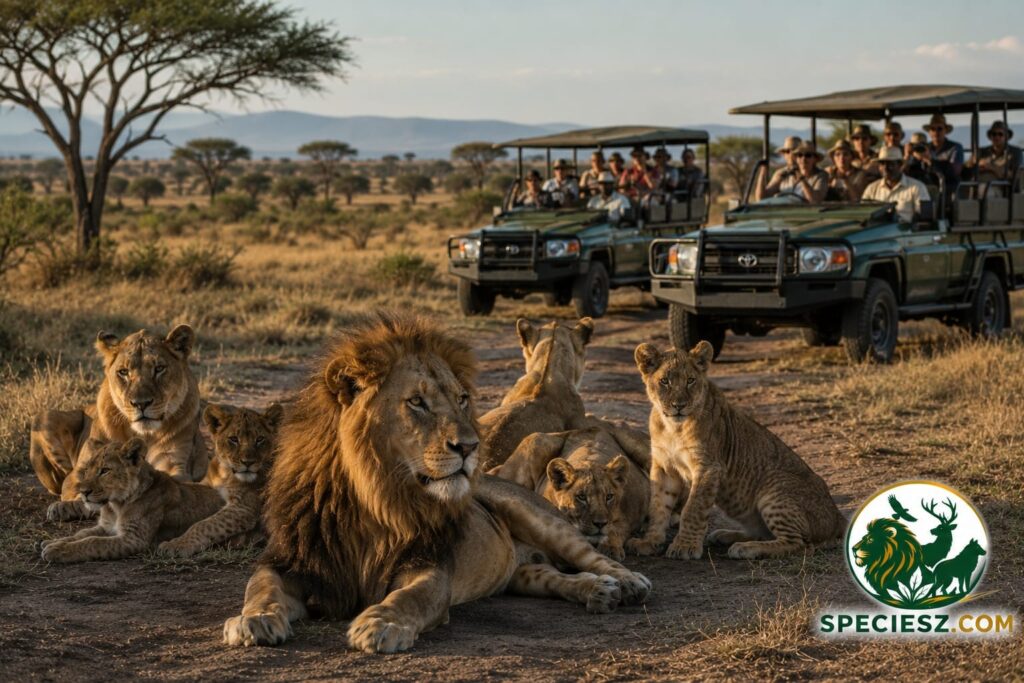
The lion is currently classified as Vulnerable on the International Union for Conservation of Nature (IUCN) Red List.
Although lions remain widespread in parts of Africa, their overall population has declined significantly during the last several decades.
Conservationists estimate that only around 20,000–25,000 wild lions remain, although population estimates continue to change as new surveys are conducted.
How Are Lions Being Protected?
Numerous organizations, governments, and local communities are working together to conserve lions through a variety of initiatives.
These include:
- Expanding protected national parks and wildlife reserves
- Restoring degraded habitats
- Monitoring lion populations using GPS collars and camera traps
- Strengthening anti-poaching patrols
- Supporting local communities through conservation-based tourism
- Educating people about coexistence with wildlife
These efforts not only benefit lions but also protect many other species that share the same ecosystems.
Why Lion Conservation Matters
Protecting lions has far-reaching ecological benefits.
Healthy lion populations help:
- Maintain balanced herbivore populations
- Prevent overgrazing
- Support biodiversity
- Strengthen ecosystem stability
- Promote sustainable wildlife tourism
As a flagship species, lions also attract global attention and funding for broader conservation efforts across Africa and Asia.
Ecological Importance
Lions are considered a keystone species, meaning their presence has a major influence on the structure and health of ecosystems.
By controlling populations of large herbivores, lions help prevent excessive grazing that could damage grasslands and reduce plant diversity.
This natural balance supports countless other organisms, including:
- Birds
- Insects
- Small mammals
- Reptiles
- Scavengers
After lions finish feeding, the remains of their prey provide food for animals such as:
- Hyenas
- Jackals
- Vultures
- Marabou storks
- Numerous insects and microorganisms
In this way, lions contribute to nutrient recycling and energy flow throughout the ecosystem.
The disappearance of apex predators can trigger ecological imbalances known as trophic cascades, where changes at the top of the food chain affect many other species.
Relationship with Humans
For thousands of years, lions have played an important role in human culture.
They appear in:
- Ancient mythology
- Religious traditions
- National emblems
- Literature
- Paintings
- Films
- Sports team logos
Across many cultures, lions symbolize:
- Courage
- Leadership
- Strength
- Royalty
- Protection
At the same time, people living near lion habitats sometimes experience conflicts due to livestock losses.
Finding effective ways for humans and lions to coexist remains one of the most important goals of modern wildlife conservation.
Community participation, responsible tourism, habitat protection, and scientific research are all helping create a future where both people and lions can thrive together.
Interesting Facts About Lions
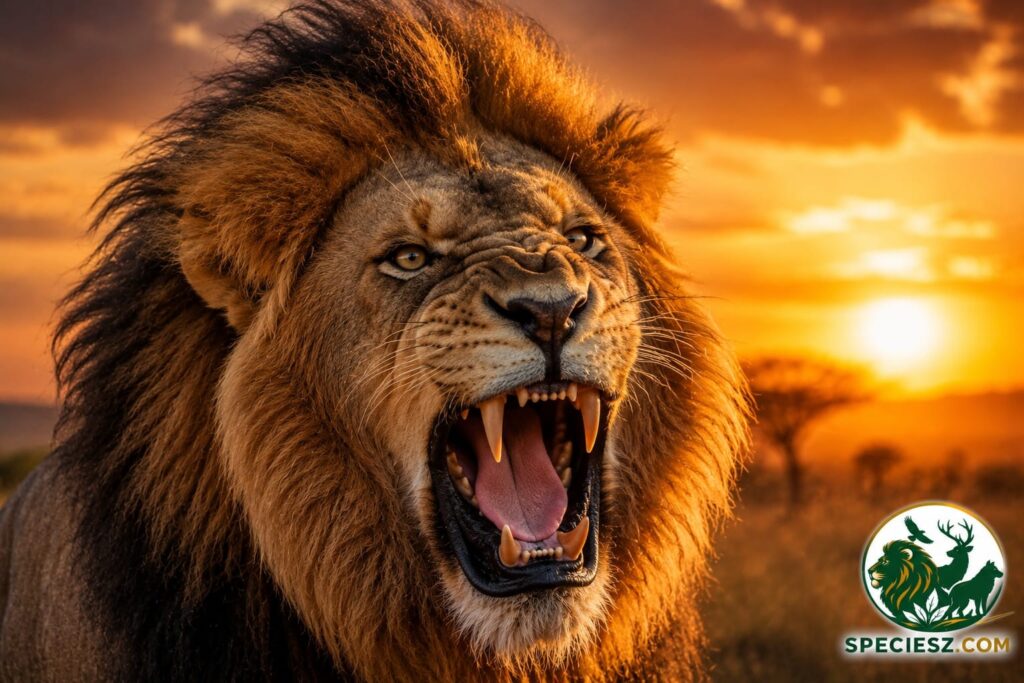
Lions are among the most studied wild animals, yet they continue to surprise scientists with their intelligence, social behavior, and remarkable adaptations. Here are some fascinating facts that make lions truly unique.
1. Lions Are the Only Truly Social Big Cats
Unlike tigers, leopards, jaguars, and snow leopards, lions live in organized family groups called prides. This cooperative lifestyle allows them to defend territories, raise cubs together, and hunt larger prey more efficiently.
2. A Lion’s Roar Can Travel Up to 8 Kilometers (5 Miles)
The deep roar of a lion is one of the loudest vocalizations produced by any big cat. It serves several important purposes, including communicating with pride members, marking territory, and warning rival males to stay away.
3. Lionesses Do Most of the Hunting
Although male lions are larger and stronger, lionesses are responsible for the majority of hunting. Their speed, agility, and teamwork make them highly effective predators capable of taking down prey much larger than themselves.
4. Male Lions Can Be Recognized by Their Mane
A male lion’s mane is one of its most distinctive features. Besides making the lion appear larger, it helps protect the neck during fights. Darker and fuller manes are often associated with maturity, good health, and higher reproductive success.
5. Cubs Learn Through Play
Young lions spend much of their time chasing, wrestling, and pouncing on one another. These playful activities develop the coordination, strength, and hunting techniques they will need as adults.
6. Lions Spend Most of Their Day Resting
Despite their powerful appearance, lions are surprisingly inactive for much of the day. Adult lions typically rest for 16 to 20 hours daily, conserving energy for hunting, territorial defense, and caring for the pride.
7. Lions Have Excellent Night Vision
A lion’s eyes are specially adapted for low-light conditions, allowing it to see several times better than humans at night. This gives lions a significant advantage when hunting after sunset.
8. Every Lion Has a Unique Whisker Pattern
Just as human fingerprints are unique, the arrangement of spots where a lion’s whiskers grow is different for every individual. Researchers use these patterns to identify lions in the wild.
9. Lions Rarely Need to Drink Every Day
Much of a lion’s water requirement comes from the animals it eats. However, whenever water is available, lions readily drink from rivers, lakes, and waterholes.
10. Lions Help Keep Ecosystems Healthy
As apex predators, lions regulate herbivore populations and contribute to maintaining ecological balance. Protecting lions also helps conserve many other species that share the same habitat.
Myths vs Facts
Lions have inspired stories and legends for centuries. While many of these tales are entertaining, some have created misconceptions about these magnificent animals.
| Myth | Fact |
|---|---|
| Lions live in jungles. | Most lions inhabit savannas, grasslands, and open woodlands, not dense jungles. |
| Male lions hunt all the time. | Lionesses perform most of the hunting, while males primarily defend the pride and its territory. |
| Lions always hunt alone. | Lions often hunt cooperatively, making them the most social of all big cats. |
| Lions are unstoppable hunters. | Many hunting attempts fail, and lions rely on patience, stealth, and teamwork to succeed. |
| All lions have large dark manes. | Mane size and color vary depending on age, genetics, climate, and overall health. |
Lion vs Tiger
Lions and tigers are the two largest members of the cat family. Although they belong to the same genus (Panthera), they differ in several important ways.
| Feature | Lion | Tiger |
|---|---|---|
| Scientific Name | Panthera leo | Panthera tigris |
| Social Behavior | Lives in prides | Mostly solitary |
| Habitat | Savannas and grasslands | Forests, mangroves, and grasslands |
| Mane | Present in adult males | Absent |
| Largest Population | Africa | Asia |
| Hunting Style | Cooperative | Solitary ambush hunter |
| Conservation Status | Vulnerable | Endangered |
Both species are apex predators and play essential roles in maintaining healthy ecosystems. Conservation efforts are vital for ensuring their survival in the wild.
Why Lions Matter
Lions are far more than powerful predators. They are symbols of healthy ecosystems, indicators of biodiversity, and ambassadors for wildlife conservation. Their survival reflects the health of the landscapes they inhabit.
Protecting lions means protecting vast areas of savannas and forests that support thousands of other plants and animals. Conservation initiatives focused on lions also benefit local communities through ecotourism, scientific research, and sustainable land management.
Every successful effort to conserve lions contributes to preserving one of Earth’s most iconic species for future generations.
Frequently Asked Questions (FAQs)
What is the scientific name of the lion?
The scientific name of the lion is *Panthera leo. It belongs to the family *Felidae and the genus Panthera, which also includes tigers, leopards, jaguars, and snow leopards.
Where do lions live?
Most wild lions live in *Sub-Saharan Africa, especially in countries such as Tanzania, Kenya, Botswana, South Africa, and Namibia. A small population of *Asiatic lions survives in Gir National Park and Wildlife Sanctuary in Gujarat, India.
What do lions eat?
Lions are carnivores and mainly feed on large herbivores such as zebras, wildebeests, buffaloes, antelopes, gazelles, and warthogs. They may also scavenge carcasses or hunt smaller animals when necessary.
How long do lions live?
Wild lions generally live *10 to 14 years, while lions in protected zoos and wildlife sanctuaries can live *20 to 25 years due to better healthcare and a consistent food supply.
Why are lions called the “King of the Jungle”?
The title is symbolic rather than scientific. Lions are admired for their strength, courage, and dominance, but they primarily live in savannas and grasslands, not jungles.
Are lions endangered?
According to the *IUCN Red List, lions are currently classified as *Vulnerable. Their populations continue to face threats from habitat loss, human-wildlife conflict, declining prey, and illegal hunting.
How fast can a lion run?
A lion can reach speeds of up to 80 km/h (50 mph) in short bursts. However, it cannot maintain this speed for long and relies on stealth and teamwork while hunting.
Do lions live alone?
No. Lions are the only truly social big cats. They live in family groups called prides, which usually consist of related females, their cubs, and one or more adult males.
What is the biggest threat to lions?
The biggest threats include habitat destruction, human-wildlife conflict, declining prey populations, illegal hunting, and climate change. Human activities remain the primary reason for the decline of wild lion populations.
Why are lions important to the ecosystem?
Lions are apex predators that help regulate herbivore populations, maintain ecological balance, and support biodiversity. Their presence is essential for keeping African ecosystems healthy and functioning naturally.
Sources:
Conclusion
The lion (Panthera leo) remains one of the most extraordinary animals on Earth. Its unmatched combination of strength, intelligence, cooperation, and adaptability has earned it a special place in nature and human culture alike. From the vast African savannas to the protected forests of India, lions continue to inspire admiration while playing a critical role in maintaining healthy ecosystems.
Although conservation efforts have achieved encouraging results in some regions, the future of wild lions still depends on protecting their habitats, reducing conflicts with humans, preventing illegal wildlife trade, and supporting science-based conservation programs. Every successful initiative helps ensure that future generations will continue to witness these magnificent big cats roaming freely in the wild.
By understanding how lions live, hunt, communicate, and contribute to biodiversity, we can better appreciate why conserving this iconic species is not only important for lions themselves but also for the countless other plants and animals that share their habitats.